
Tether and Circle freeze more than $2.5 billion in stablecoins tied to the Binance hack
Tether and Circle acted within hours of the October 29 theft. Ripple said it was freezing RLUSD as well, without giving an amount.
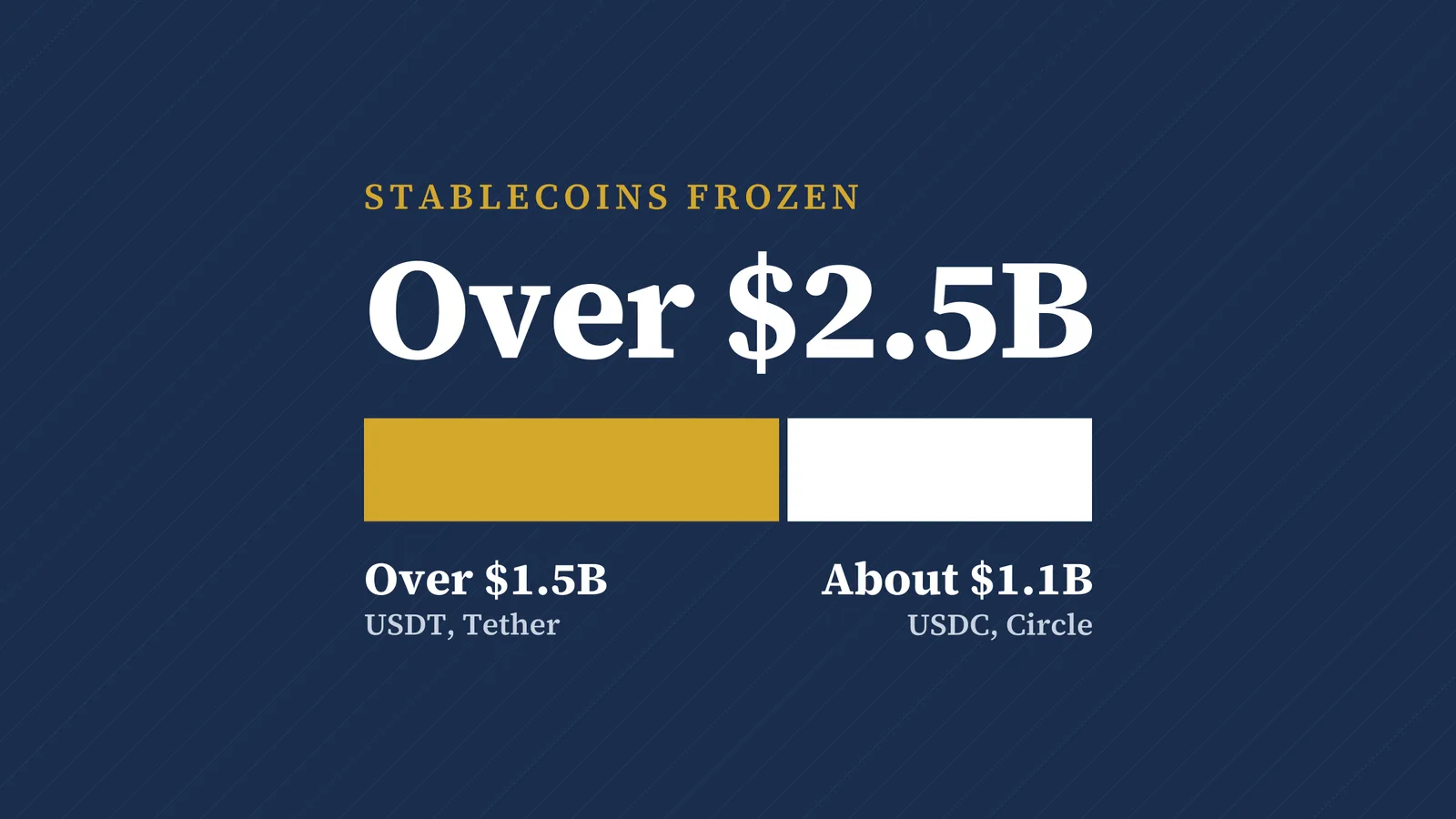
Tether and Circle froze more than $2.3 billion in stablecoins linked to the $6.3 billion theft from Binance within hours of the October 29 attack, according to their chief executives' social media posts as reported by CoinDesk and CNBC. Their later statements put the combined total at more than $2.5 billion.
What happened
Stablecoins such as USDT and USDC are issued by companies that can block specific addresses from moving their tokens. After the attackers drained Binance's wallets, both issuers used that ability:
- Tether: Ardoino put the frozen amount at more than $1.5 billion in USDT, a figure Tether repeated in a November 2 statement. Reports of the exact figure varied slightly, from about $1.56 billion (TechCrunch) to over $1.57 billion (CoinDesk).
- Circle: Allaire first said more than $800 million in USDC had been frozen, according to CoinDesk and CNBC. In a November 5 blog post, Circle said it had frozen "approximately $1.1 billion in USDC associated with the incident in coordination with law enforcement." Elliptic counts 823 million USDC among the stolen funds and says Circle froze all of it; neither explains the difference.
- Ripple: Jack McDonald, Ripple's senior vice president of stablecoins, said the company was "actively freezing" RLUSD linked to the theft, CNBC reported. He did not give a figure. Binance co-CEO Yi He later thanked Ripple for freezing "approximately 200 million," without naming the token, Bitcoin.com News reported; the figure has not been independently confirmed.
Binance said in an update that about $3 billion of the stolen assets had been frozen in total, including $2.3 billion in USDT and USDC, CoinDesk reported.
How the totals moved
Freezing numbers change as analysts match more addresses to the theft. By November 7, blockchain analytics firm Elliptic put the amount frozen or seized at $2.85 billion of the $6.43 billion it counts as stolen. Tether's figure comes from its November 2 statement; Circle's rose from more than $800 million in Allaire's first post to about $1.1 billion on November 5.
Why it matters
The early freezes of more than $2.3 billion locked up more than a third of the roughly $6.3 billion haul within hours and made up most of the about $3 billion that Binance said had been frozen in its first update. They also show how much control centralized issuers keep over tokens that trade as if they were cash. That control limits the damage in a hack, but the same power can be used against any address the issuer chooses to block.
What it could mean for traders
For holders, USDT and USDC carry issuer risk as well as market risk: tokens sent to or from a blocked address can become unusable. For the wider market, frozen stablecoins cannot be sold or swapped, which reduces the amount of stolen value the attackers can push through decentralized exchanges. The next markers are whether more addresses are frozen and how the frozen tokens are eventually returned. Tether and Circle can freeze, burn, and reissue tokens to return them to a victim, CNBC has explained, but their statements did not say how or when that would happen here.
What happens next
Analytics firms continue to track the rest of the funds, which the attackers were moving through other networks. Elliptic's latest tally and the routes used are covered separately. Tether also reported its third-quarter reserves the day after the hack; see Tether's latest reserve report.
Sources
- Tether — Tether Freezes Over $1.5 Billion From Binance Hack, Keeping Funds Out of North Korea's Reach (November 2, 2026)
- Circle — The Binance incident: collective defense must move at machine speed (November 5, 2026)
- CoinDesk — Binance loses over $6 billion in 'biggest crypto hack in history' (October 29, 2026)
- CNBC — $6.3 billion Binance hack is largest crypto theft on record (October 29, 2026)
- TechCrunch — Binance pauses withdrawals as hackers suspected of stealing billions in crypto (October 29, 2026)
- CNBC — Binance's $6.3 billion hack: What we know and what comes next (October 30, 2026)
- Elliptic — How North Korea is laundering the $6.4 billion stolen from Binance (November 3, 2026)
- Bitcoin.com News — Ripple and World Liberty freeze Binance hacker funds (October 30, 2026)
This article was researched and drafted with the help of AI tools, checked against its sources in a separate AI fact-check and edit, and approved for publication by Trading Metrics. Read our AI use policy.
This article is for information only and is not financial advice. Crypto assets and leveraged products are volatile and you can lose money. Do your own research and consider your circumstances before trading.