
Kraken parent Payward reports $60 million in third-quarter adjusted EBITDA and plans US prediction markets
Its new headline measure, total platform margin, rose 12% from the second quarter to $487 million but was 12% lower than a year earlier. The company also gave no net income figure.
Contents
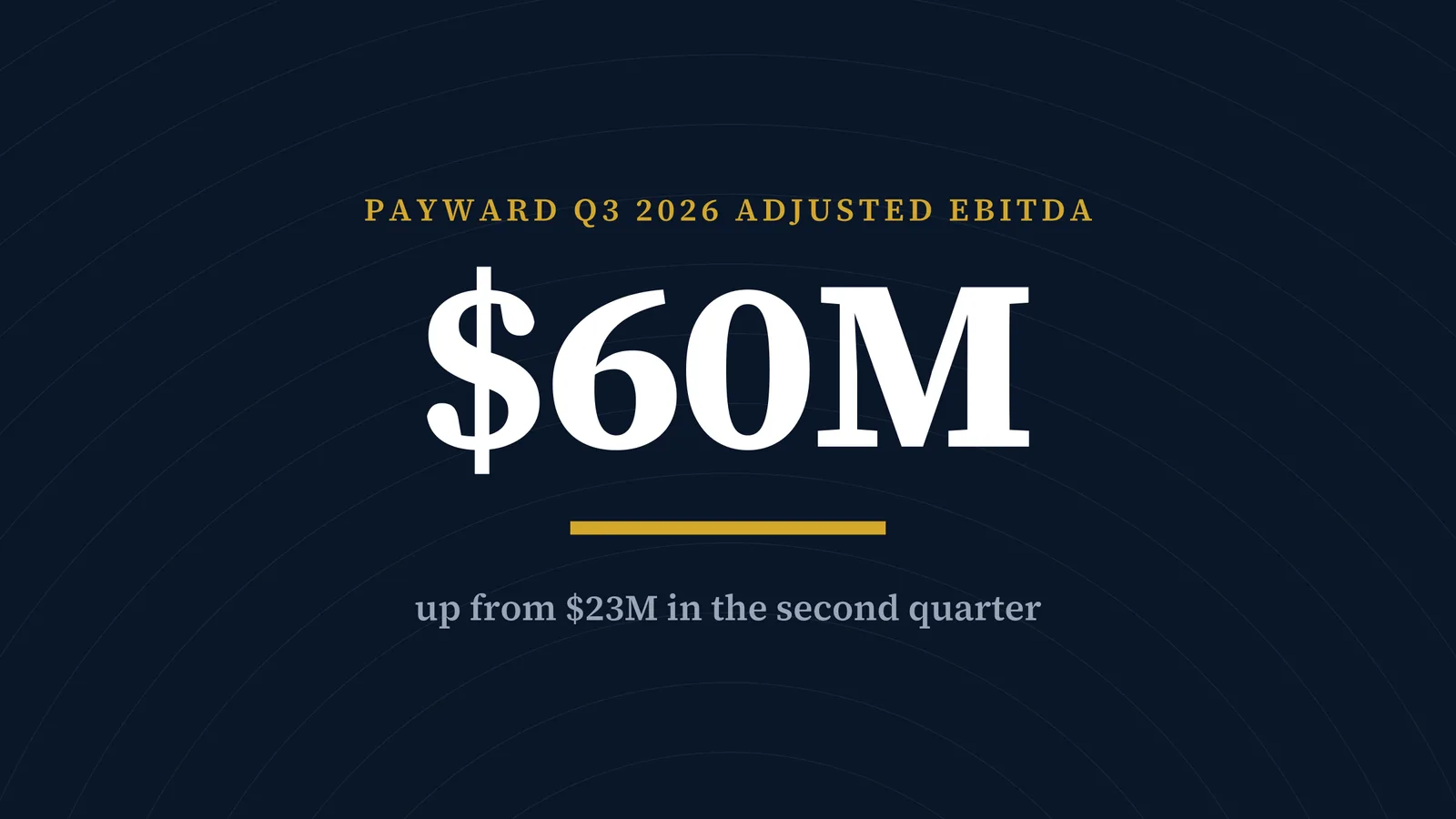
Payward, the company that owns the crypto exchange Kraken, reported adjusted earnings before interest, taxes, depreciation and amortization (EBITDA) of $60 million for the third quarter of 2026, up from $23 million in the second quarter. The figures are in its third-quarter highlights, published on Friday, November 13, which also list prediction markets for US clients among the products it plans to launch next.
A new way of reporting
Payward changed three things in how it reports. It now leads with total platform margin (TPM) instead of adjusted revenue. According to the release, adjusted revenue deducted the cost of the crypto the company delivers to clients in a trade but not the staking rewards it pays them; TPM deducts both. The company says the closest standard accounting (GAAP) measure is gross profit.
TPM is now split by how the money is earned. Transaction-based TPM, from fees when clients trade, rose 7% from the second quarter to $234 million. Asset-based TPM, earned over time on assets that clients hold with the company, rose 26% to $128 million. Access-based TPM, paid for using a product, data or service, rose 7% to $125 million.
Together, the asset- and access-based parts made up 52% of the total, up from 50% in the second quarter and 46% a year earlier. Payward says access-based TPM grew 59% from the third quarter of 2025.
The third change is two new operating measures: contracts traded, which counts derivatives contracts that carry a fee per contract, and billable accounts, which counts accounts that pay for access to a product.
The quarter in numbers
| Measure (third quarter of 2026) | Value | Change from Q2 2026 | Change from Q3 2025 |
|---|---|---|---|
| Total platform margin | $487 million | +12% | -12% |
| Adjusted EBITDA | $60 million | from $23 million | not given |
| Total platform transaction volume | $353 billion | +22% | -30% |
| Contracts traded | 66 million | +10% | +84% |
| Assets on platform (quarterly average) | $43 billion | +4% | -21% |
| Billable accounts | 1.5 million | +9% | +74% |
| Funded accounts | 7.1 million | +7% | +37% |
Source: Payward. TPM and adjusted EBITDA are non-GAAP measures.
The company says it grew while spot trading across the industry fell 7% from the second quarter, citing CoinMarketCap data, and that its share of industry spot volume rose to 6.5% in September 2026 from 3.3% a year earlier. Average assets on the platform fell 21% from a year earlier, but at constant prices they rose 29% to $71 billion. Payward says clients added assets in each of the last 12 months. A client can hold more than one funded account, so the 7.1 million figure is not a count of people.
Payward also completed its quarterly proof of reserves as of September 30, 2026, with the accounting firm The Network Firm validating the report, the company said.
What Payward says comes next
In its outlook, Payward lists prediction markets for US clients and equity perpetual futures, which are futures contracts with no expiry date, that would run on its own exchange, clearinghouse and futures broker. It holds the three US Commodity Futures Trading Commission (CFTC) registrations for those roles, known as DCM, DCO and FCM. It also says it intends to bring on-chain perpetual futures to US clients, starting with markets on Hyperliquid, subject to regulatory approval.
The release also describes plans to send US dollar wires through its own Federal Reserve master account, to test a US credit card and to launch a personal finance agent, an AI tool that the company says would act only within limits set by the client and only after the client approves. Payward agreed in October to buy Saldo Bank, an EU-licensed digital bank; the deal still needs regulatory approval. Its tokenized stock product, xStocks, passed $1 billion in assets in October, the company says. On November 11 the company added more than 200 tokenized UK and European stocks to xStocks.
Prediction markets are under legal pressure in several US states. On November 12, Louisiana sued Kalshi, Robinhood and eight other platforms, according to local media reports.
How it compares
Payward's figures are not prepared in the same way as those of its listed peers, so they cannot be compared one for one. Coinbase's third-quarter results showed total revenue about 35% lower than a year earlier, and Robinhood reported a 55% fall in crypto revenue over the same period.
What it could mean for traders
The release shows Payward relying less on trading fees: just over half of its margin now comes from assets held on the platform and from paid access. For Kraken clients in the US, the stated plans for prediction markets and perpetual futures depend on regulatory approvals, and the release gives no launch dates for them.
Sources
- Payward — Payward Q3 2026 financial highlights (November 13, 2026)
This article was researched and drafted with the help of AI tools, checked against its sources in a separate AI fact-check and edit, and approved for publication by Trading Metrics. Read our AI use policy.
This article is for information only and is not financial advice. Crypto assets and leveraged products are volatile and you can lose money. Do your own research and consider your circumstances before trading.