
US producer prices rise 0.3% in October; annual rate reaches 6.5%, the highest since 2022
Goods prices rose 10.2% from a year earlier. The monthly gain was a little below forecasts, but the annual rate rose to its highest in almost four years ahead of the Fed's December meeting.
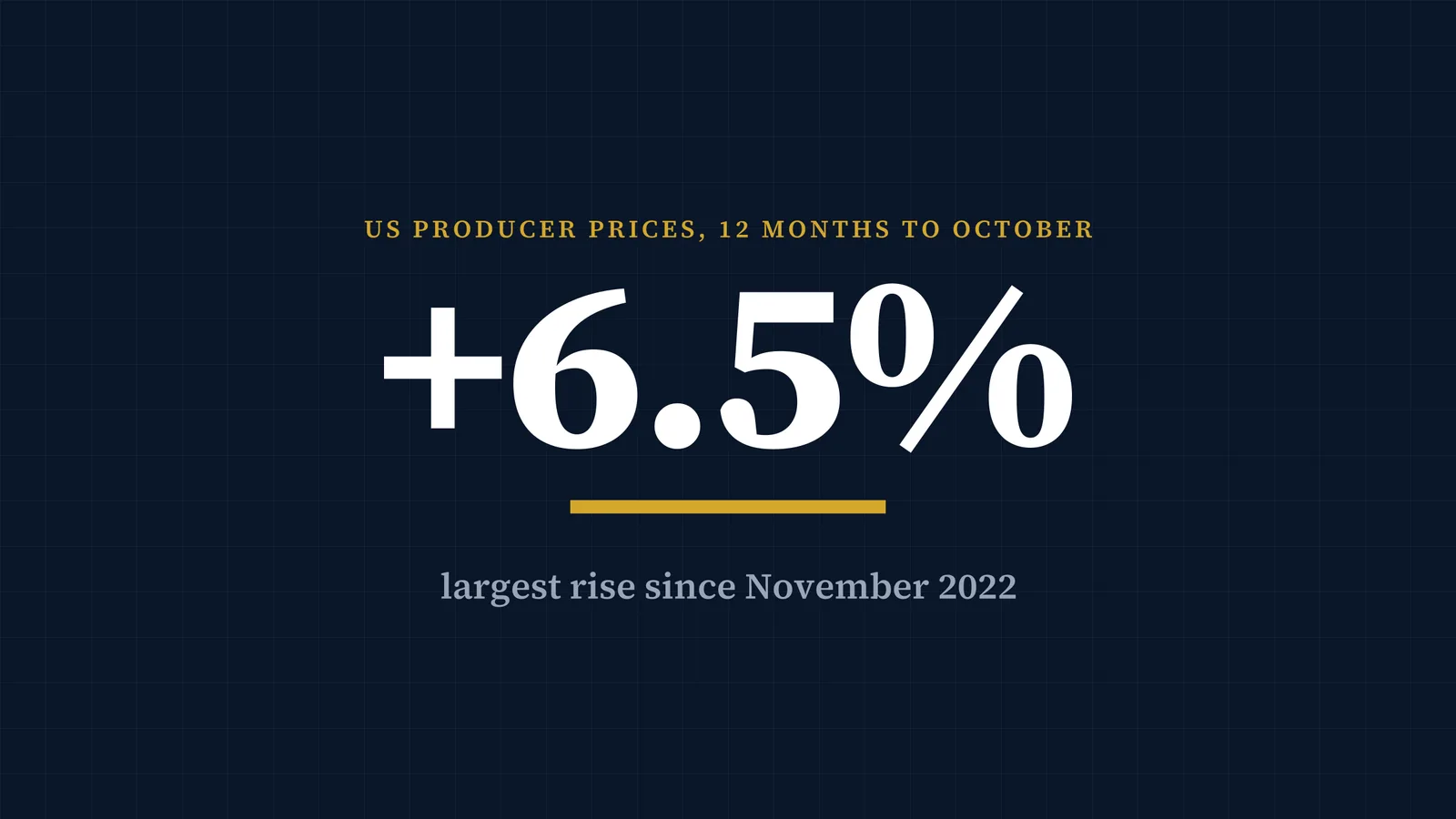
The US Producer Price Index for final demand rose 0.3% in October, seasonally adjusted, and 6.5% from a year earlier, the largest 12-month rise since November 2022, the Bureau of Labor Statistics (BLS) reported at 8:30 a.m. ET (13:30 UTC) on Friday, November 13. The index measures the prices that US producers receive for goods and services, before they reach consumers.
What rose and what fell
Goods led the October increase. The index for final demand goods rose 0.5%, and more than 60% of that came from goods other than food and energy, the BLS said. Food prices rose 1.3%, while energy edged down 0.1%. Diesel fuel fell 7.9%, and basic organic chemicals rose 3.9%.
Services prices rose 0.2%, the fifth monthly increase in a row. Three-fourths of the rise came from transportation and warehousing, up 2.0%, and truck freight alone rose 3.9%. Margins for trade services, which track what wholesalers and retailers earn, fell 0.2%.
| Measure | October 2026 (month) | 12 months to October |
|---|---|---|
| Final demand (headline PPI) | +0.3% | +6.5% |
| Final demand goods | +0.5% | +10.2% |
| Final demand services | +0.2% | not published in table A |
| Final demand less foods, energy and trade services | +0.5% | +4.9% |
Source: BLS. Monthly changes are seasonally adjusted; 12-month changes are not.
Further up the supply chain, prices for processed goods used in production rose 14.6% over 12 months, the most since July 2022. Prices for unprocessed goods fell 3.1% in October but were 16.9% higher than a year earlier. The BLS also revised its figures for June through September.
How it compares with forecasts and the CPI
The 0.3% monthly rise followed a 1.4% jump in September and was slightly below the 0.4% forecast, CNBC reported, citing the Dow Jones consensus. Core PPI, which excludes food and energy, rose 0.3%, in line with expectations, according to CNBC. The annual rate of 6.5% was 0.2 percentage point higher than September's.
The report followed the October consumer price index, published on November 10, which showed that consumer prices rose 0.4% in October.
What it means for the Fed
The Federal Reserve held its target range at 3.75% to 4% in October, and several officials have since pointed to faster inflation. Governor Christopher Waller said on November 10 that he leans toward a December hike, and Chicago Fed President Austan Goolsbee told CNBC on November 13 that inflation is "going the wrong way."
After the release, markets continued to fully price a rate increase of at least a quarter percentage point at the December meeting, CNBC reported.
What it could mean for traders
In our assessment, the PPI kept the picture of rising inflation intact, even though the monthly figure came in a little below forecasts. For rate-sensitive assets, including bonds, the dollar and crypto, the question is whether the Fed raises rates at its December 8–9 meeting and by how much. The pricing cited above reflects market expectations, not a forecast of ours.
Sources
- US Bureau of Labor Statistics — Producer Price Indexes — October 2026 (USDL 26-1687) (November 13, 2026)
- Federal Reserve — Meeting calendars and information
- CNBC — Chicago Fed's Goolsbee says central bank 'has definitely got work to do' on inflation (November 13, 2026)
- CNBC — Wholesale prices rose 0.3% in October, putting annual rate at 6.5%, the highest in nearly four years (November 13, 2026)
This article was researched and drafted with the help of AI tools, checked against its sources in a separate AI fact-check and edit, and approved for publication by Trading Metrics. Read our AI use policy.
This article is for information only and is not financial advice. Crypto assets and leveraged products are volatile and you can lose money. Do your own research and consider your circumstances before trading.