
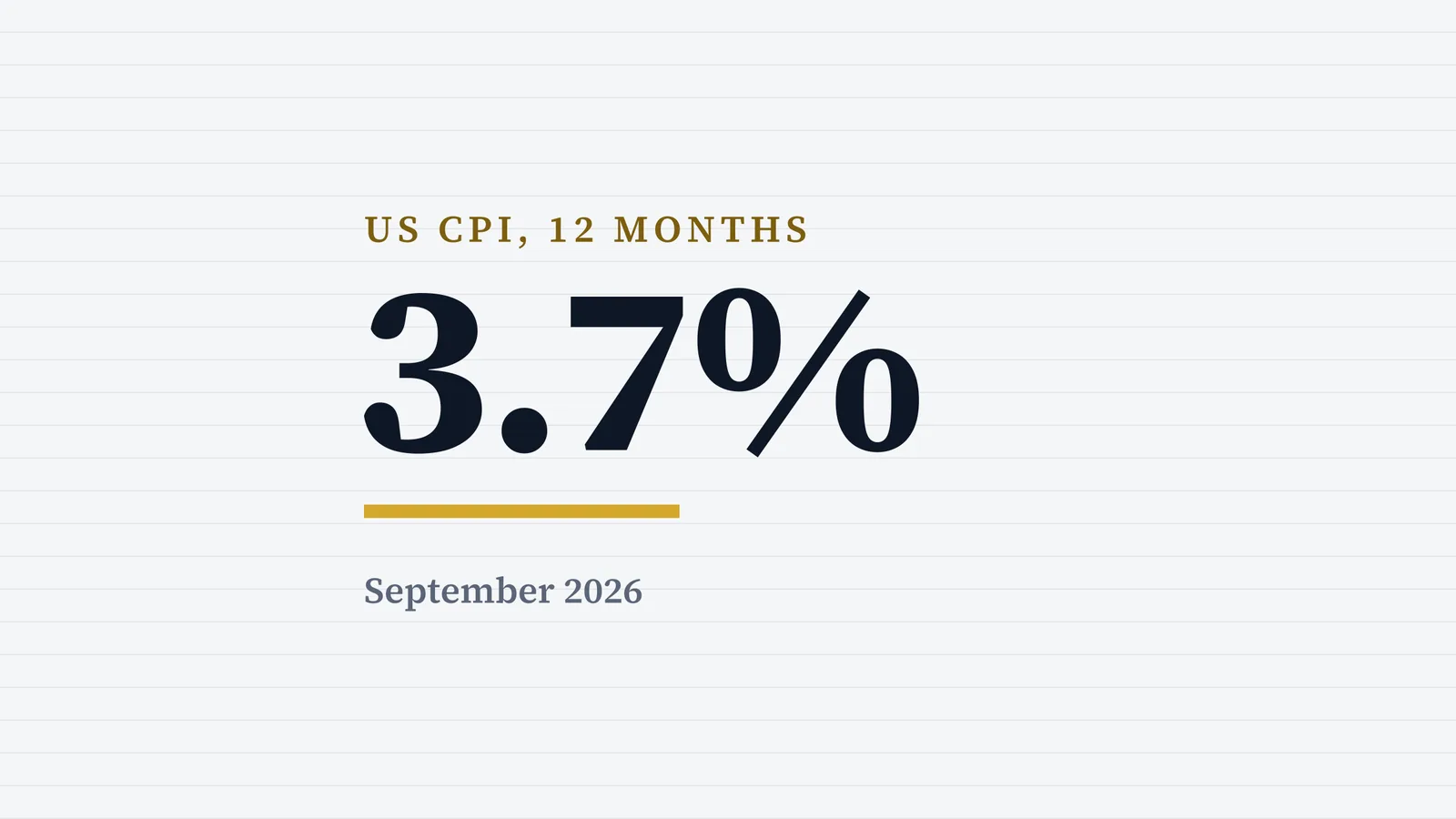
US inflation rose to 3.7% in September as gasoline prices jumped
Consumer prices rose 0.6% in a month, with gasoline accounting for more than half of the increase. Core inflation was 2.6% over 12 months.
Update (November 10, 2026, 13:49 UTC): The BLS published the October CPI on November 10, 2026; this article now says these are no longer the latest figures and links our October CPI report.
US consumer prices, as measured by the consumer price index (CPI), rose 0.6% in September and 3.7% in the 12 months to September, the US Bureau of Labor Statistics (BLS) said on October 14. Gasoline accounted for more than half of the monthly increase.
What the data showed
The all-items index rose 0.6% in September after a 0.4% rise in August, on a seasonally adjusted basis. Over the 12 months to September, before seasonal adjustment, prices rose 3.7%, up from 3.4% in the 12 months to August.
Energy drove the jump. "The index for gasoline rose 9.1 percent in September, accounting for over half of the monthly all items increase," the BLS said. The broader energy index rose 5.2% in the month and 20.4% over the year.
Core inflation, which excludes food and energy and is watched as a gauge of underlying price pressure, rose 0.3% for a second month. Its 12-month rate climbed to 2.6% from 2.4% in August.
| Measure | September, monthly | 12 months |
|---|---|---|
| All items | +0.6% | +3.7% |
| Core (less food and energy) | +0.3% | +2.6% |
| Energy | +5.2% | +20.4% |
| Gasoline | +9.1% | +34.2% |
Monthly changes are seasonally adjusted; 12-month changes are not. Source: BLS.
Why it matters
CPI inflation of 3.7% is well above the 2% rate the Federal Reserve targets, although the Fed measures its goal with a different index, the personal consumption expenditures (PCE) price index. In our assessment, readings like this weigh against rate cuts. The Fed kept rates on hold on October 28, with two officials voting for an increase and its statement saying that inflation "remains elevated."
What it could mean for traders
Interest-rate expectations feed into the cost of borrowing, the dollar, and the appetite for risk assets, including crypto. When inflation surprises to the upside, markets tend to price a tighter path for rates. The split between energy-driven headline inflation and steadier core inflation is the detail to watch: a rise driven by gasoline can reverse faster than a broad rise in core prices.
What came next
The BLS published the October CPI on Tuesday, November 10, 2026, at 08:30 ET (13:30 UTC), replacing these figures as the latest reading. Because the BLS did not run its price surveys in October 2025, during a lapse in federal funding, the October release has no 12-month rate for all items, so September's 3.7% remains the latest annual figure; our October CPI report has the details.
Sources
- US Bureau of Labor Statistics — Consumer Price Index – September 2026 (October 14, 2026)
- Federal Reserve — Federal Reserve issues FOMC statement (October 28, 2026) (October 28, 2026)
- Federal Reserve — Why does the Federal Reserve aim for inflation of 2 percent over the longer run?
This article was researched and drafted with the help of AI tools, checked against its sources in a separate AI fact-check and edit, and approved for publication by Trading Metrics. Read our AI use policy.
This article is for information only and is not financial advice. Crypto assets and leveraged products are volatile and you can lose money. Do your own research and consider your circumstances before trading.