
House Democrats propose up to 30% whistleblower awards for prediction market fraud
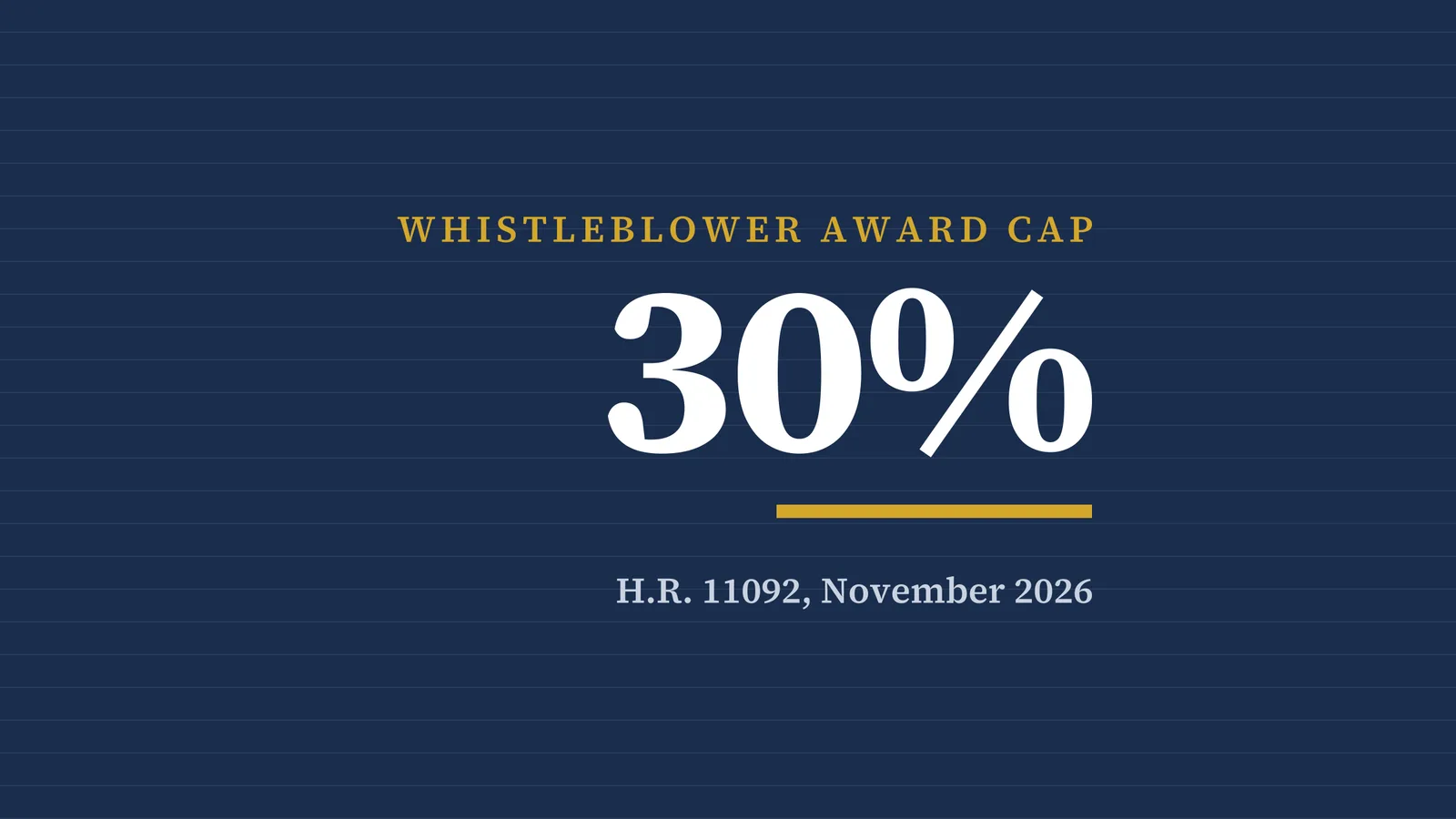
H.R. 11092 would create a Justice Department program that pays tipsters 10% to 30% of the sanctions in prediction market fraud cases over $1 million. It has been referred to two House committees.
Contents
Two House Democrats have introduced a bill that would pay whistleblowers 10% to 30% of the monetary sanctions in federal fraud cases involving prediction markets. Rep. Sean Casten of Illinois introduced H.R. 11092, the Policing Insider Trading in Prediction Markets Act of 2026, on Thursday, November 19, 2026, with Rep. Ted Lieu of California as the only cosponsor, according to the bill's record on Congress.gov. The two announced it in a press release on Friday, November 20.
What the bill would do
The text published by Casten's office directs the Attorney General to set up a program paying awards to whistleblowers who voluntarily give the Justice Department original information that leads to the successful resolution of a "covered enforcement action." The total award for an action would be no less than 10% and no more than 30% of the monetary sanctions that result from it.
A covered enforcement action is a criminal investigation, action or settlement brought by the Attorney General that relates to "a Federal fraud offense involving the use of a prediction market platform" and results in monetary sanctions above $1 million. Sanctions include penalties, disgorgement, interest and money forfeited in the case.
The definition of a prediction market platform is broad: any website, application, exchange or protocol that facilitates trading in a contract tied to "the outcome, occurrence, or nonoccurrence of an event or contest." Original information must come from the whistleblower's own knowledge or analysis, must not already be known to the government and must not rest solely on public sources.
The money would come from the Justice Department's Assets Forfeiture Fund, which the bill amends to allow such payments. In setting an award, the Attorney General would weigh how significant the information was, how much the whistleblower helped, and the interest in deterring violations and "upholding public trust in government."
Other provisions in the text:
- No award for a whistleblower who is convicted or found civilly liable in connection with the case.
- Anonymous tips through a lawyer, under guidance the Attorney General would have to issue within 180 days. The whistleblower's identity must be disclosed before any payment.
- An appeal to the department within 60 days of a decision, followed by judicial review.
- A ban on employers firing, demoting or harassing a whistleblower for reporting.
- An annual report to the House and Senate Judiciary committees on awards granted and amounts paid.
The text on Casten's site carries no bill number, and Congress.gov had no text for H.R. 11092 when we checked on November 21 at about 12:10 UTC. We could not confirm that the two versions are identical.
What the sponsors say
Casten said in the release that prediction markets have "a serious insider trading problem" and that whistleblowers can help crack down on it. Lieu said government insiders "should not be able to profit from betting on U.S. military operations or the contents of a President's speech," and named Kalshi and Polymarket as platforms where the bill would encourage reporting. "This blatant corruption needs to end," Lieu said.
The release cites several cases to argue for the bill, including an anonymous trader it says made nearly $1 million from bets on US military action against Iran and a presidential teleprompter operator it says earned more than $100,000 betting on the President's words. Trading Notified has not independently verified those examples.
The bill is endorsed by groups including Citizens for Responsibility and Ethics in Washington (CREW), the Project on Government Oversight (POGO), Public Citizen and Americans for Financial Reform, the release says. It includes no comment from Kalshi, Polymarket or the Justice Department. Cointelegraph, which reported the bill on November 21, described the award range in the same terms.
A week of scrutiny for prediction markets
The bill follows several moves in Congress. On November 13, a staff memo from the House Oversight Committee said existing law already bars federal officials from trading on nonpublic information from their jobs, and urged Congress to consider barring them from prediction markets. On November 17, senators questioned President Donald Trump's two CFTC nominees on the markets. On November 19, the same day H.R. 11092 was introduced, the Senate passed the DEATH BETS Act, which would bar regulated exchanges from listing contracts tied to war, terrorism, assassination, US military operations or a death.
Earlier in 2026, Casten and Lieu led 54 House Democrats in urging the Justice Department to pursue insider trading on prediction markets more aggressively, according to the release.
What it could mean for prediction market traders
In our assessment, the bill changes nothing for traders today. It has only been referred to committee, and both sponsors are Democrats. If it became law, its main effect would be to give people who see suspicious trading from the inside, such as employees of platforms, agencies or companies, a paid route to federal prosecutors. Because it covers any federal fraud offense involving a platform, including protocols, its reach could extend beyond the government insiders the release focuses on. Points to watch are whether either committee takes it up, whether a Senate version appears, and whether the official text on Congress.gov matches the version Casten's office published.
Sources
- Congress.gov (Library of Congress) — H.R. 11092, 119th Congress: bill record, actions, cosponsors and committees (November 19, 2026)
- Office of Rep. Sean Casten — Casten and Lieu Introduce Bill to Combat Insider Trading on Prediction Markets (November 20, 2026)
- Office of Rep. Sean Casten — Policing Insider Trading in Prediction Markets Act of 2026 (bill text, PDF) (November 20, 2026)
- CFTC Whistleblower Office — Whistleblower Program overview
- Cointelegraph — US lawmakers propose up to 30% rewards for prediction market whistleblowers (November 21, 2026)
This article was researched and drafted with the help of AI tools, checked against its sources in a separate AI fact-check and edit, and approved for publication by Trading Metrics. Read our AI use policy.
This article is for information only and is not financial advice. Crypto assets and leveraged products are volatile and you can lose money. Do your own research and consider your circumstances before trading.